GM Physiotherapy delivers mobile aged care physiotherapy across the Gold Coast. In short, we come to you, whether that is your own home, a retirement village unit, or your room in a residential aged care home. There is no clinic to travel to and no transport to arrange.
Since November 2025 the aged care system has changed considerably, and one change matters more than any other: physiotherapy is now classed as a clinical support under Support at Home, which means eligible participants pay nothing towards it. This page explains how to access support, what it costs, and what we actually do when we visit.
What Is Aged Care Physiotherapy?
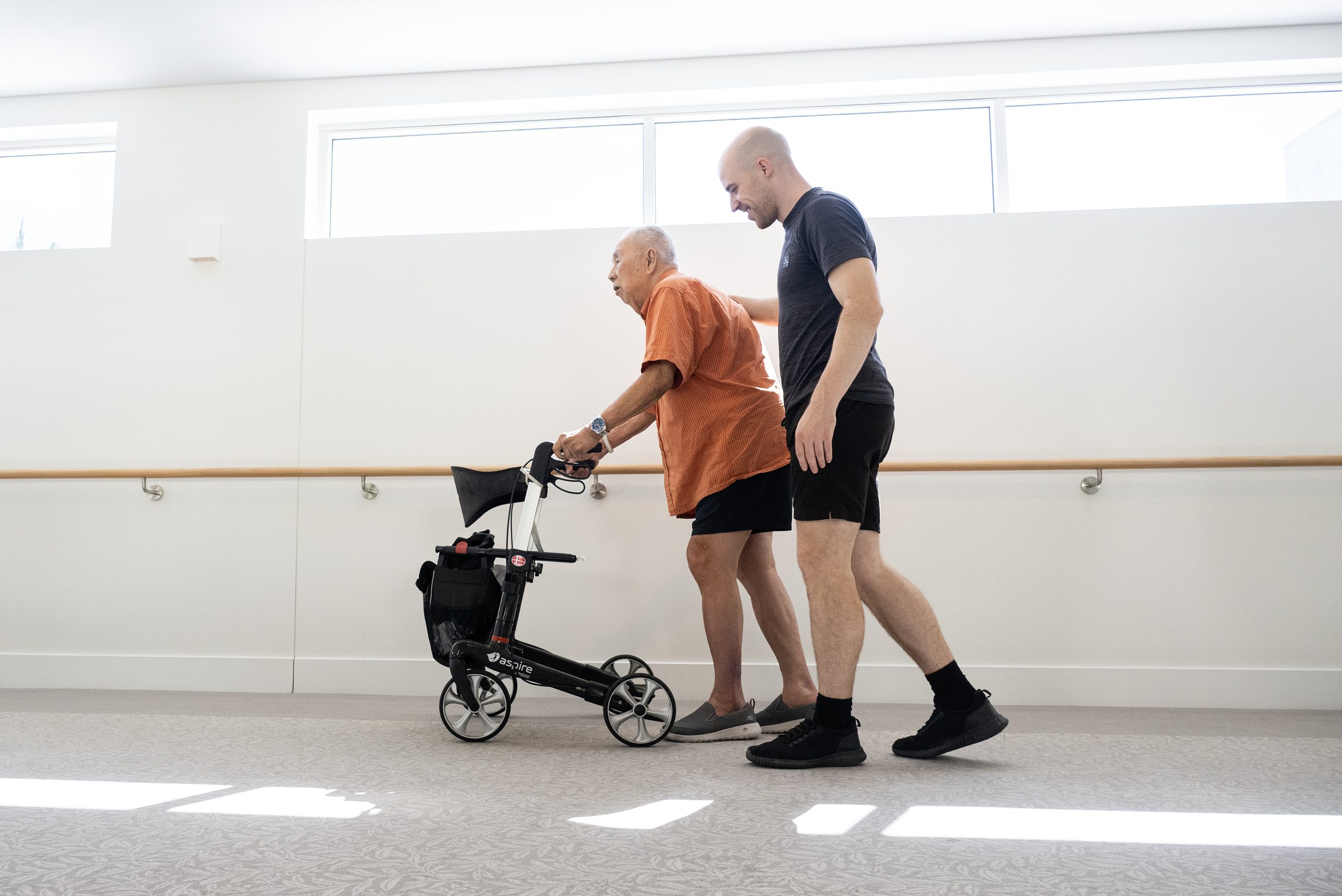
Aged care physiotherapy, sometimes called geriatric physiotherapy, is physiotherapy designed around the needs of older people rather than around a single injury. The focus is on maintaining mobility, keeping you steady on your feet, managing pain, and helping you keep doing the everyday activities that make independent life possible.
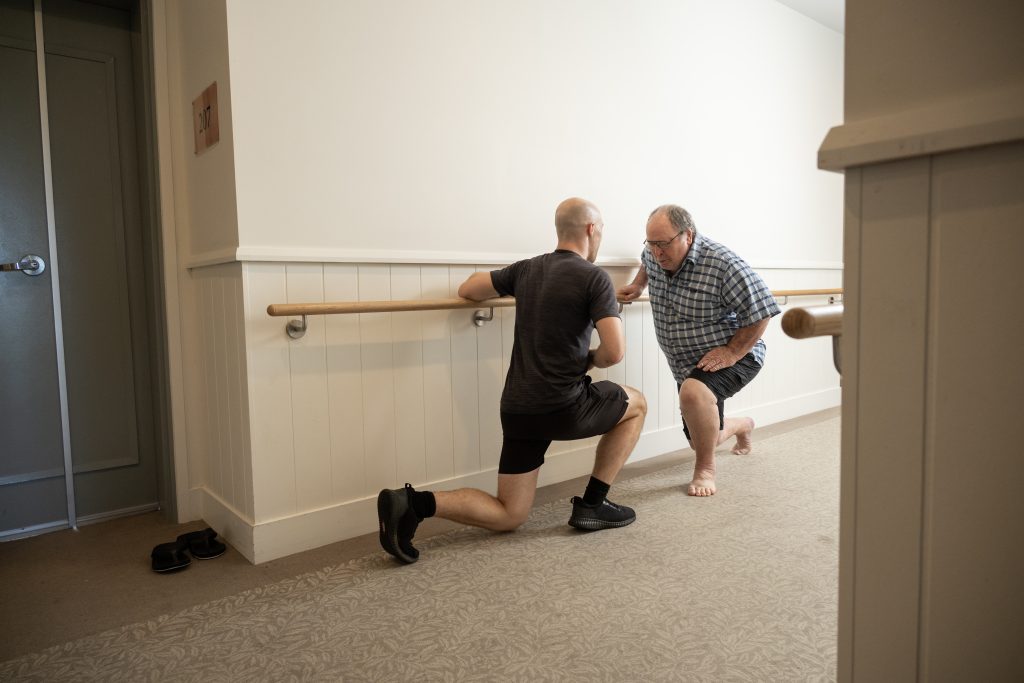
An assessment might look at how you get out of a chair, how you manage the step at your back door, whether your walking frame is set at the right height, and what would happen if you went down on the bathroom floor. That is a different conversation from a sports injury appointment, and it needs a different approach to care.
Contact Our Team of Specialists Today
How We Deliver Mobile Aged Care Physiotherapy Across the Gold Coast
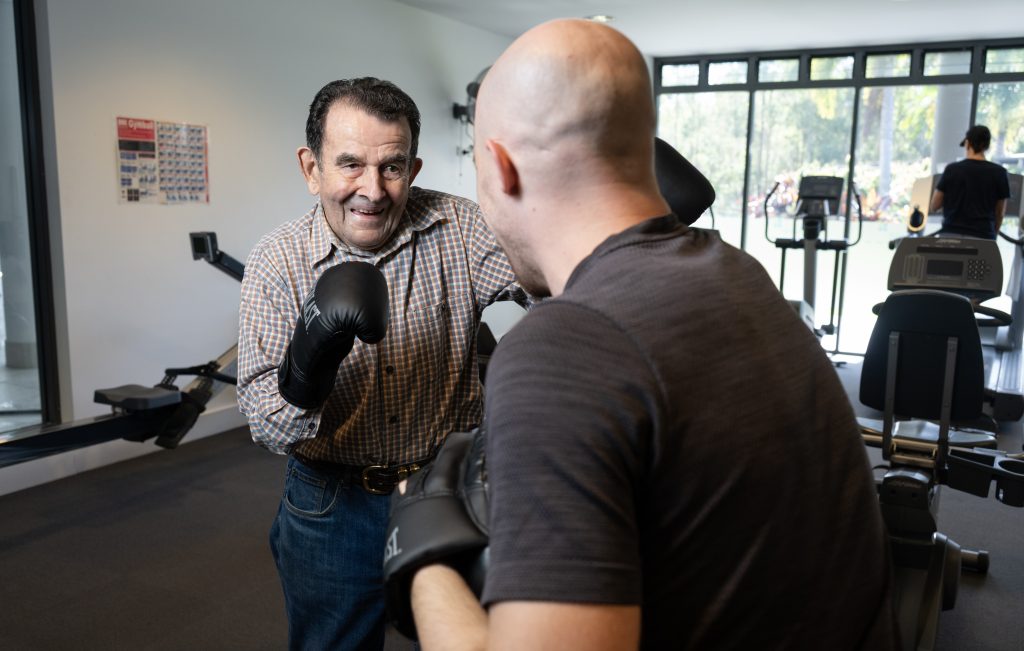
We are a fully mobile physiotherapy practice , and home-based aged care is what we do. Home visits are not an add-on for us, they are the entire model, and there are good clinical reasons for it. Practising a transfer on your own bed, with your own rails and your own bathroom floor, is far more useful than practising it on unfamiliar equipment. Working in your home environment also means we see the loose rug, the poor lighting on the stairs and the chair that is too low , which is where a large share of falls actually begin.
It also means family members, carers and support workers can be present, learn the programme and carry it on between our visits.
We deliver aged care physiotherapy seven days a week by appointment, between 8am and 6pm, and we provide physiotherapy and osteopathy under the same booking. Our Gold Coast services are built around helping people stay living independently at home for as long as that is realistic.
Support at Home and Physiotherapy at No Cost to You
The Support at Home program began on 1 November 2025, replacing Home Care Packages and Short-Term Restorative Care. Services are grouped into three contribution categories: clinical supports, independence, and everyday living. Physiotherapy sits in clinical supports.
The Department of Health and Aged Care states it plainly: “You will not have to contribute for clinical care services, such as nursing and physiotherapy.” That applies whether you are a full pensioner, a part pensioner or a self-funded retiree. Everyone contributes nothing towards clinical supports.
This is a genuine change in your favour. Under the old Home Care Package system, physiotherapy competed for space inside one flexible budget against cleaning, gardening and social support, and it frequently lost. Under Support at Home, physiotherapy is in the category you do not pay for.
Ongoing budgets run across eight classification levels, from roughly $10,731 a year at level 1 to roughly $78,106 a year at level 8, released quarterly and indexed each July. Check the current amounts with My Aged Care, since they change.
The Restorative Care Pathway
If you need a short, intensive burst of therapy rather than ongoing support, the Restorative Care Pathway provides around $6,000 of funding for up to 16 consecutive weeks, with the possibility of a second unit taking it to around $12,000. It is a multidisciplinary model that can include physiotherapy, occupational therapy and exercise physiology. The 16 weeks cannot be paused, so timing matters.
Assistive Technology and Home Modifications
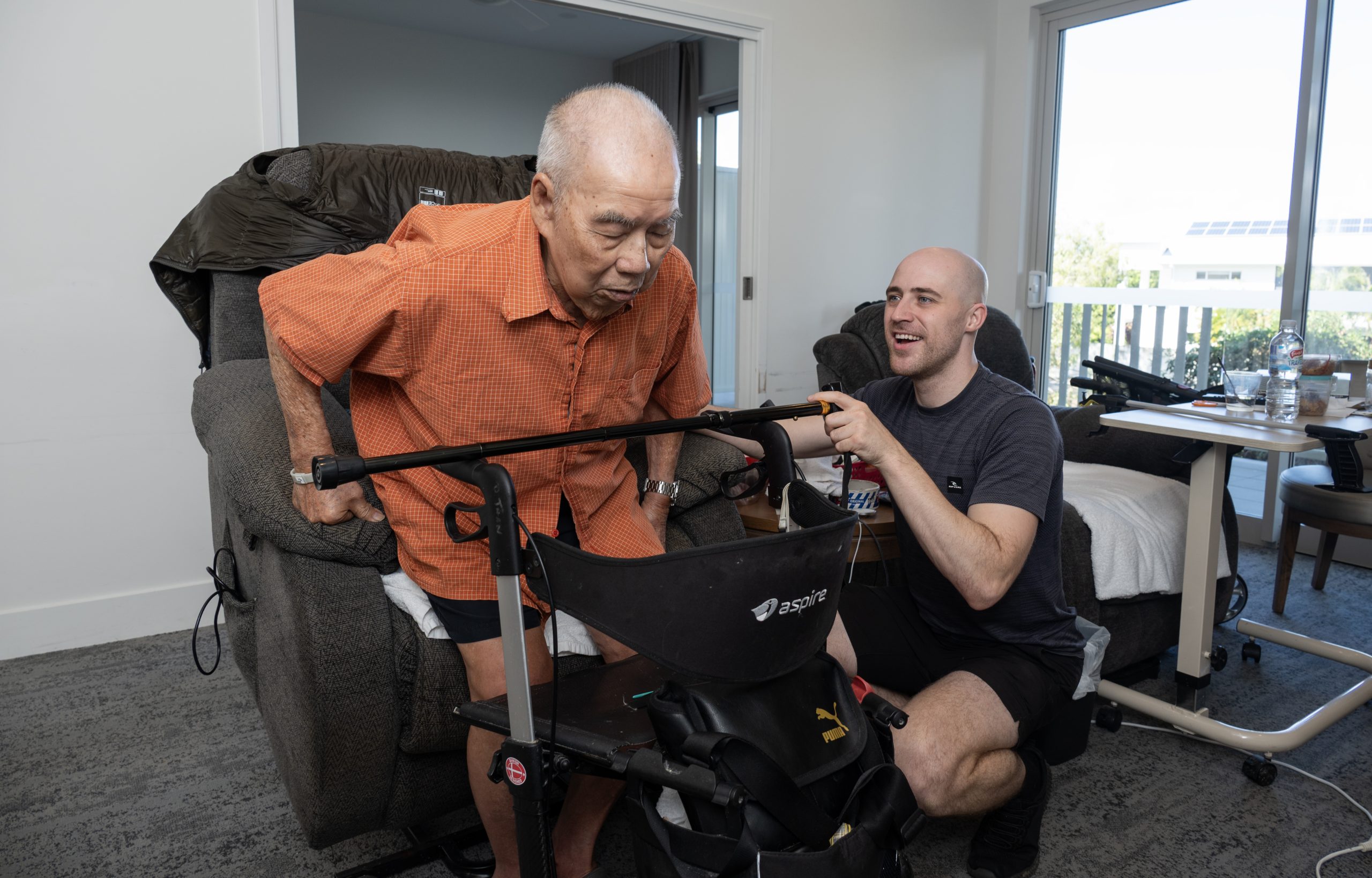
Equipment sits outside your quarterly budget entirely, through the Assistive Technology and Home Modifications scheme. There are three tiers, low at under $500, medium up to $2,000 and high up to $15,000 or more where the need is evidenced. A physiotherapist is named in the scheme as a qualified prescriber, so we can assess and recommend a walking frame, rails, a shower stool or a wheelchair without eating into the funding you use for services.
What Happened to the Home Care Package?
Home Care Packages closed to new entrants on 1 November 2025. If you already held a home care package , you moved across to Support at Home on equivalent funding under the “no worse off” principle, so nothing was taken away from you.
The harder problem is waiting. At 31 March 2026 there were 100,191 people nationally approved and waiting for a Support at Home budget, including 13,969 in Queensland. The Department’s published median waits are one month for urgent priority, one to two months for high, six to seven months for medium and seven to eight months for standard. Most people fall into the last two.
You do not have to wait to start. Many of our clients begin privately, get moving again, then transition onto funded care when their budget is allocated. Our fees are published openly on the website so you can see exactly what that costs before you commit.
Commonwealth Home Support Programme and Other Funding Routes
The Commonwealth Home Support Programme (CHSP) continues to operate and has been extended to 30 June 2027, transitioning to Support at Home no earlier than July 2027. CHSP funds allied health and therapy services on a client contribution model, with the Department’s indicative allied health co-contribution sitting at roughly $6 to $17 per visit, and nobody is refused a service because they cannot afford to contribute.
One thing to be clear about: GM Physiotherapy is not a CHSP provider, so we cannot deliver physiotherapy under CHSP funding. If you are already a CHSP client and want to use that funding for physiotherapy, ask your CHSP provider which allied health services they offer or can arrange for you. If you would rather see us, you can book privately at our published fees, or use a Medicare care plan or DVA card where you are eligible. And if you are later assessed for Support at Home, physiotherapy becomes a clinical support with nothing to pay.
Other routes we work with, each explained in more detail in our guide to who pays for your physio :
Medicare
A GP Chronic Condition Management Plan gives you up to five subsidised allied health services per calendar year across all professions combined. Residents of an aged care home access the same five services through a multidisciplinary care plan instead.
Department of Veterans’ Affairs
Gold Card holders are covered for clinically required physiotherapy, White Card holders for accepted conditions. Your GP provides the referral, and DVA has specific home visit and aged care facility items.
NDIS
For participants who entered the scheme before 65 and have chosen to remain in it.
Privately
No referral, no waiting list, no eligibility test.
Physiotherapy for Aged Care Residents in Aged Care Facilities
We also provide aged care physiotherapy inside residential aged care facilities across the Gold Coast, working as an associated provider alongside the home’s own team.
There is a structural gap here that is worth naming honestly. Under AN-ACC, which replaced the Aged Care Funding Instrument in 2022, allied health is bundled into the home’s subsidy rather than separately funded, and physiotherapists do not count towards mandatory care minutes. The Australian Physiotherapy Association reports that residents received an average of 2.68 minutes of physiotherapy per resident per day in March 2025, which is roughly 26 minutes a week. Homes are still required to deliver allied health, rehabilitation and therapeutic exercise programmes under the residential care service list, and allied health minutes have been a mandatory quality indicator since April 2025.
Bringing in an external provider is often the practical way to close that gap without adding to the payroll.
Information for Care Managers and Facility Managers
If you coordinate care services for older people, here is what you need to know about working with us. We accept referrals from care managers, case managers, support coordinators, GPs, discharge planners and families. We hold current AHPRA registration and appropriate insurance, we document assessment findings and measurable goals, and we report back so your care plan reflects what has actually changed.
For residential homes, the strengthened Aged Care Quality Standards that commenced on 1 November 2025 are directly relevant. Action 5.5.4 under Outcome 5.5 requires providers to minimise falls and harm from falls by “maximising mobility to prevent functional decline”, delivering timely post-falls care, and monitoring and reviewing falls. Outcome 5.4 requires comprehensive clinical assessment and facilitated access to allied health and rehabilitation. Outcome 5.1 requires that the provider and external health professionals agree their respective roles, responsibilities and protocols. A documented physiotherapy programme helps you evidence all three.
The Aged Care Physiotherapy Care Services We Provide for Older Adults
Our aged care physiotherapy services cover the following, whether we see you in home or in a facility:
- Mobility and gait assessment, including walking aid prescription and set-up
- Balance work and tailored exercise programs built around your ability, not a generic sheet
- Strength and conditioning to slow the muscle loss that makes everyday tasks harder
- Falls prevention, including how to get up safely off the floor
- Transfer practice for bed, chair, toilet and car
- Rehabilitation after hip fracture , joint replacement , stroke or a hospital admission
- Pain management , including hands-on treatment where it is clinically appropriate
- Chest physiotherapy and respiratory care
- Assessment and prescription of equipment and home modifications
- Carer and support worker education so the programme continues between visits
- Support for people with more complex care needs, including dementia and multiple conditions
We also provide osteopathy , which some older adults prefer for persistent pain and stiffness, and which works well alongside a physiotherapy care plan.
Falls Prevention and Reducing Falls Risk
Falls are the single biggest reason older Australians end up in hospital. In 2024-25 there were 253,800 fall-related hospitalisations nationally, making up 43.4 per cent of all injury hospitalisations. People aged 65 and over are hospitalised for falls around twelve times more often than adults aged 25 to 44. Queensland ranks second nationally for falls hospitalisations.
The good news is that this is one of the better-evidenced areas in all of physiotherapy. A Cochrane review of 108 trials and 23,407 community-dwelling older people found that exercise reduces the rate of falls by 23 per cent, rated high certainty. The Australian Commission on Safety and Quality in Health Care’s 2025 community falls guidelines carry a Level 1A recommendation that older people undertake two to three hours of exercise per week on an ongoing basis, targeting balance and mobility with strength training included, designed and delivered by health professionals such as physiotherapists or exercise physiologists.
Two honest caveats. In residential aged care the evidence is newer and weaker, with a 2025 Cochrane review finding a reduction in fall rate rated moderate certainty rather than high. And there is high-certainty evidence that the benefit does not persist once a programme stops. You cannot reduce the risk once and be finished with it. It is something you maintain, which is why we build programmes you can keep doing and why we teach them to the people around you.
A Personalised Approach to Care and Your Care Plan
Your first visit is a comprehensive assessment lasting 90 minutes. We talk first about what you actually want to be able to do, because “get back to walking to the coffee shop” is a better goal than “improve mobility”. We then assess strength, joint range, balance, walking, transfers, pain and safety around the home.
From there we write a care plan with measurable goals, agree how often we will visit, and leave you with something to practise. We measure progress rather than assume it, and we adjust as you go.
Working With Your Broader Care Team and Occupational Therapy Services
Good aged care is rarely one profession working alone. We coordinate with GPs, support coordinators, plan managers, nurses, support workers, family and other allied health professionals so that everyone is pulling in the same direction.
People often ask about the difference between physiotherapy and occupational therapy. Physiotherapy generally concentrates on movement itself, so strength, balance, walking and pain. Occupational therapy services generally concentrate on the tasks and the environment, so dressing, kitchen access, bathroom layout and equipment for daily living. The two overlap and complement each other, and where an occupational therapist or an exercise physiology programme would serve you better, we will say so and help arrange the referral.
Where We Provide Aged Care Physiotherapy on the Gold Coast
Our Gold Coast aged care physio services reach across the city and out into the wider home and community, including:
That includes the retirement villages and aged care homes within them. If your suburb is not listed, please ask.
Frequently Asked Questions
Is physiotherapy covered under My Aged Care or a home care package? Yes. Under Support at Home, physiotherapy is a clinical support and attracts no participant contribution at all. If you are still on Commonwealth Home Support, a modest co-contribution usually applies.
Do you see clients under My Aged Care? Yes. We work with participants and with the registered providers who coordinate their services.
Do you offer physiotherapy in aged care facilities? Yes. We visit residents in aged care homes and retirement villages across the Gold Coast, either by arrangement with the facility or privately at the family’s request.
What is mobile physiotherapy? It simply means the physiotherapist travels to you rather than you travelling to a clinic. Everything needed for assessment and treatment comes with us.
Do I need a GP referral? Not for private or Support at Home funded physiotherapy. Medicare and DVA both do require a referral from your GP.
Can you help someone living with dementia? Yes. We adapt how we communicate and structure sessions, and we work closely with family and carers. We are careful not to overstate what exercise achieves for cognition, because the evidence on that point is mixed.
How long until I notice a difference? Most people notice something within four to six weeks of consistent work, though it depends heavily on your starting point and what we are treating.
Book Aged Care Physiotherapy on the Gold Coast
Whether you are arranging care for yourself, for a parent, or for someone on your caseload, we are happy to talk it through with no obligation. We can also help you work out which funding route fits your situation.
We will arrange a visit that suits you.
Our Services
General Mobility Physio

Post-Op Rehab
NDIS Physio Support
How Do You Book a Mobile Physiotherapy Session?
Booking is simple. You can book a mobile physiotherapy session directly through our contact page or call us on 0478 941 638. Once scheduled, we confirm your appointment and attend fully prepared to deliver services in the comfort of your home. Care is delivered right to your home in a professional, structured manner.
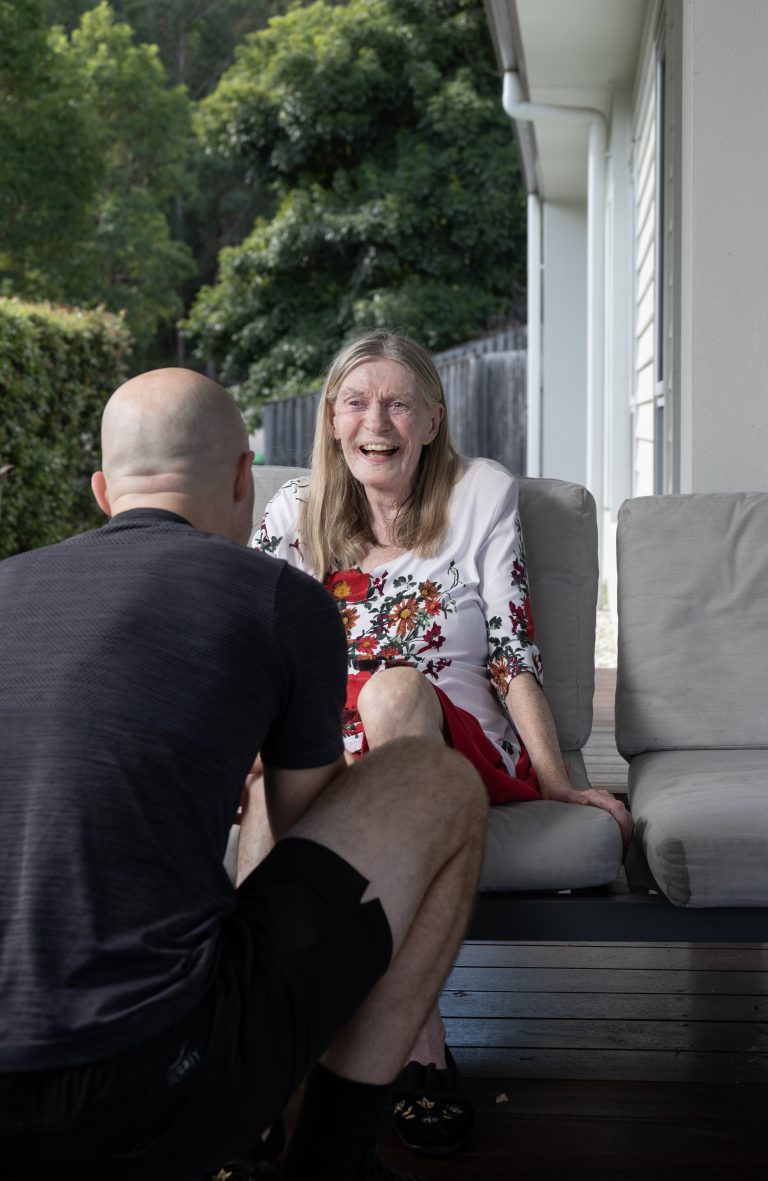
What Happens During a Mobile Physiotherapy Visit?
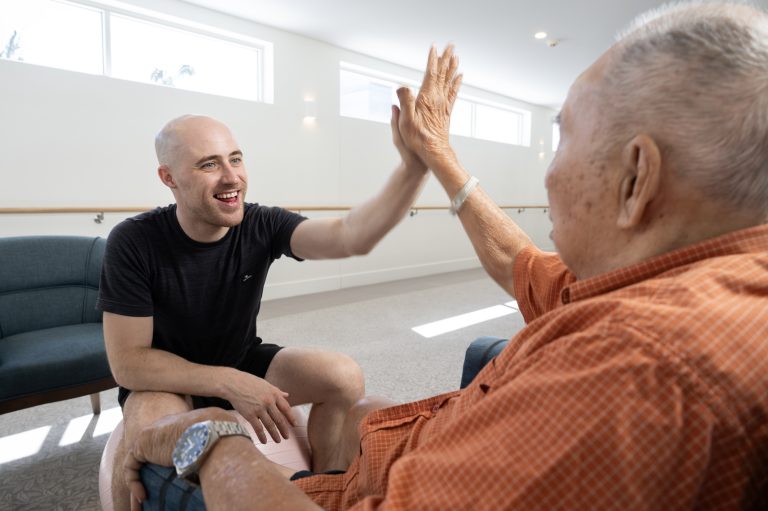
During a mobile physiotherapy visit, we complete a structured assessment and set clear goals. We assess your current mobility, strength and balance before beginning treatment. Your physiotherapy session may involve manual therapy, guided rehab exercises, and education to improve mobility and prevent re-injury. I also provide exercise programs to reduce pain between appointments.
Your Recovery Starts Here
Ready to take the first step towards improved health and mobility? Whatever your physio goals or needs are, we’re here to help you stay active and free from injury. Our physiotherapists know exactly how to get you moving, so you can enjoy life to the fullest. Contact GM Physiotherapy today to schedule your session. Let’s make your next move your best one.