Can Physiotherapy Prevent Falls in Older Adults? How a Physiotherapist Helps With Fall Prevention
By Mark Slorence
Nov 25, 2026


 Back to all posts
Yes. Physiotherapy is one of the most effective ways to prevent falls in older adults. A physiotherapist can work out why someone is at risk of falling, then use targeted exercise, gait training and practical advice to reduce that risk. Strong research supports this approach, and international falls prevention guidelines place exercise at the centre of fall prevention for older people. At GM Physiotherapy, we deliver fall prevention programs in people’s homes and aged care facilities across the Gold Coast, helping older adults stay safe, mobile and independent.
At a glance
- Exercise reduces the rate of falls in older people living in the community by around 23%.
- Programs that combine balance, functional and strength exercises work best.
- The benefit is greater when a health professional, usually a physiotherapist, delivers the program.
- A physiotherapist assesses fall risk, prescribes exercise, reviews walking aids and helps rebuild confidence.
- Mobile physiotherapy brings this care into the home, where many falls happen.
Why Falls in Older Adults Are Such a Big Concern
At least one in three people aged 65 and over living in the community fall each year, and the risk rises with age. In Australia, falls are the leading cause of injury hospitalisations and injury deaths among older people, according to the Australian Institute of Health and Welfare. Around half of hospitalised falls involve a fracture, and a hip fracture in particular can change a person’s life.
Falls also affect confidence. Many older adults develop a fear of falling and start doing less. Doing less leads to muscle weakness, stiffer joints and poorer balance, which increases the risk of future falls. Physiotherapy helps break this cycle.
23%
fewer falls among older people living in the community who take part in exercise programs (Cochrane systematic review, 2019).
What Causes Falls in the Elderly?
Most falls in older people happen when several risk factors add up. Common causes include:
- Muscle weakness, especially in the hips and legs
- Poor balance and coordination
- Changes in gait, such as shuffling or a slower walking speed
- Previous falls
- Medications that cause dizziness, and low blood pressure when standing up
- Vision problems
- Health conditions such as stroke, Parkinson’s disease, arthritis and diabetes
- Hazards such as poor lighting, uneven surfaces and loose mats
Many of these, particularly strength, balance and walking, respond very well to physiotherapy. That is why a physiotherapist is often the first health professional to see when an older person starts to feel unsteady.
What Does the Evidence Say About Physiotherapy and Fall Prevention?
A 2019 Cochrane systematic review led by Cathie Sherrington and colleagues, including Anne Tiedemann, at the University of Sydney, looked at 108 randomised controlled trials involving more than 23,000 older people living in the community. It found that:
- Exercise reduces the rate of falls by around 23%, and the number of people who fall by around 15%.
- Programs that mainly involve balance and functional exercises have high-certainty evidence for reducing falls.
- Programs that combine several types of exercise, most commonly balance, functional and strength exercises, probably reduce the rate of falls by around 34%.
- Tai chi may also reduce falls.
- The effect on falls was larger when a health professional, usually a physiotherapist, delivered the exercise.
The World Guidelines for Falls Prevention and Management for Older Adults, published in 2022, also recommend exercise interventions that include balance and functional exercises as a core prevention strategy for older adults living in the community. In short, physiotherapy reduces falls because it targets the causes that matter most.
The Role of Physiotherapy in Fall Prevention
Physiotherapy is not only about recovering from injury. It is also about prevention. Here is how a physiotherapist can help older adults reduce fall risk.
Falls risk assessment
Every program starts with an assessment. Your physiotherapist will ask about previous falls, health conditions and medications, then test strength, balance and walking using standard measures such as the Timed Up and Go test and sit-to-stand tests. They will also check any walking aid and look for hazards around the home.
Strength and balance training
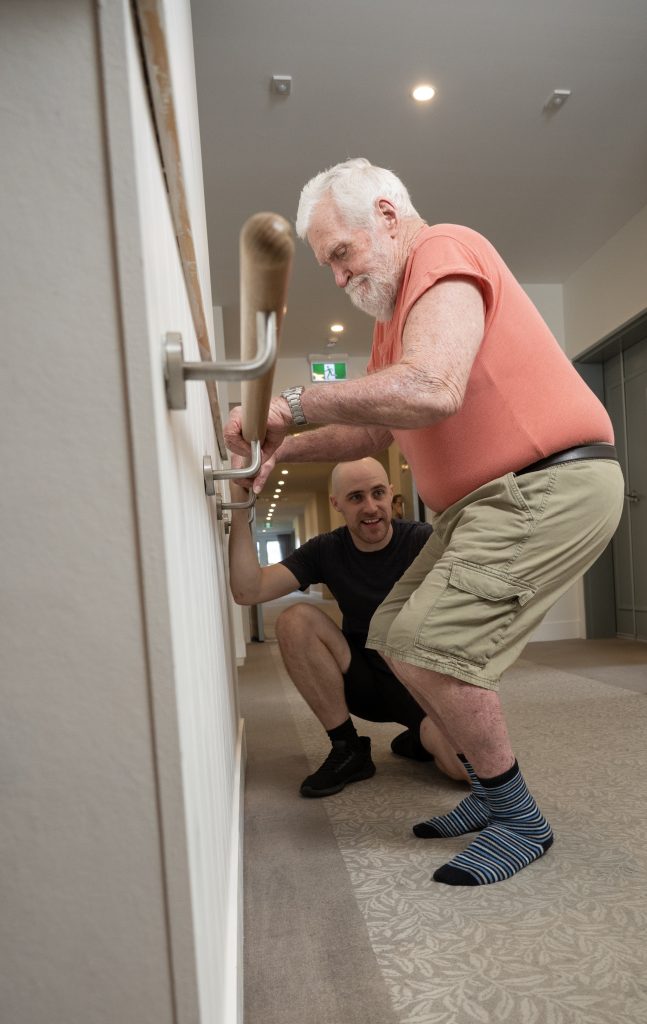
Targeted exercises build strength in the legs, hips and core and challenge balance safely. Examples include sit-to-stands, heel raises, step-ups and standing balance work with support close by. Exercises are progressed as the person improves, which is a key part of what makes them effective. See our guide to balance exercises for seniors at home for some simple starting points.
Gait training and walking aids
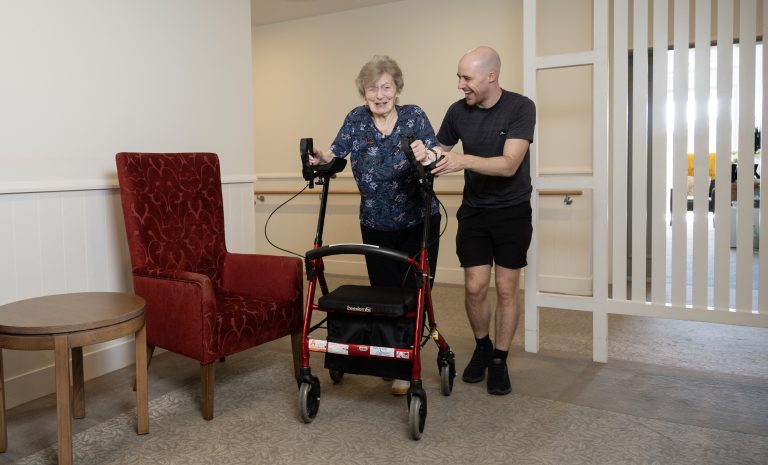
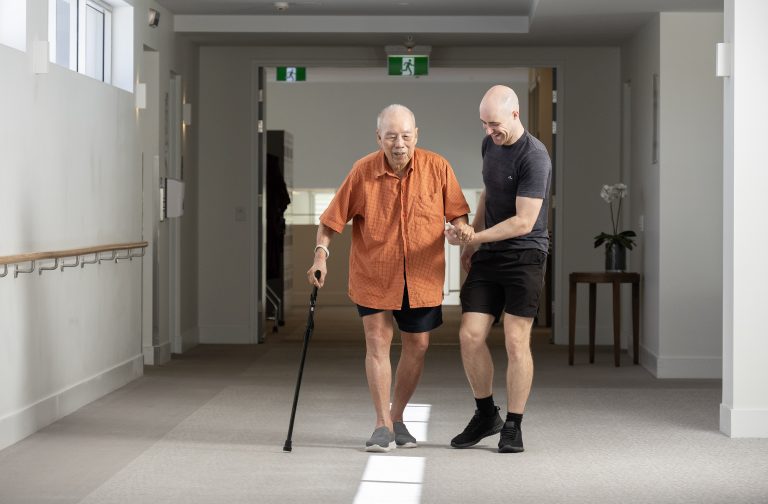
Age and health conditions can change the way a person walks. A physiotherapist can retrain walking patterns, recommend safe footwear and make sure walking aids, such as a walking stick or a walking frame, are the right type and set at the right height.
Reducing the fear of falling
Fear can be as limiting as weakness. Physiotherapists build confidence with gradual practice of real-life tasks, such as getting in and out of the shower or walking outdoors. Practising how to get up safely after a fall also helps people feel more in control.
Tailored care for health conditions
Some conditions greatly increase the risk of falls. We tailor programs for people recovering from stroke, living with Parkinson’s disease, or returning home after a hip fracture, as well as people with arthritis and chronic pain. Where suitable, hydrotherapy offers a low-impact way to build strength and balance in warm water.
Why In-Home Physiotherapy Works Well for Fall Prevention
Many falls happen at home, so it makes sense to assess and treat people there. When a mobile physiotherapist visits, they can see the actual stairs, bathroom and bed height, practise exercises in the spaces your loved one uses every day, and involve family members and carers. There is no travel, which matters for anyone who already feels unsteady. For practical changes you can make around the house, read how do I reduce my parent’s risk of falls at home?
We also provide aged care physiotherapy in residential aged care facilities, where falls are common and regular strength and balance work can make a real difference.
What Does a Fall Prevention Program Look Like?
Every program is different, but most follow a similar pattern:
- Assessment: a full falls risk assessment at home, including strength, balance, walking and home hazards.
- Goals: a personalised plan built around what matters to the person, such as walking to the shops or gardening safely.
- Regular sessions: hands-on treatment and supervised exercise, progressed over time.
- Home exercise program: simple exercises to do between visits, often with support from family or carers.
- Review: repeat testing to measure progress and adjust the plan.
Many people feel steadier within a few weeks, but the strongest fall prevention benefits come from keeping exercise going over months. Our article on how long physiotherapy takes to work explains what to expect.
Who Should See a Physiotherapist About Falls?
It is worth booking a fall prevention assessment if you or a loved one:
- Has had a fall in the last 12 months
- Feels unsteady, or holds onto furniture or walls when walking
- Is worried about falling and has started doing less
- Has recently been in hospital or had surgery
- Lives with a condition such as stroke, Parkinson’s disease or osteoporosis
- Uses a walking aid that does not feel right
Physiotherapy may be covered through Medicare, DVA, Support at Home, private health insurance or the NDIS for eligible participants. Read who pays for your physio for more detail, or learn more about our physiotherapy for older adults.
Book a Fall Prevention Assessment
If you or a loved one is worried about falls, do not wait until after an accident. Our mobile physiotherapists visit homes and aged care facilities across the Gold Coast to assess fall risk and build a program that fits your life.
Physiotherapy Can Help Prevent Falls in Older Adults
So, can physiotherapy prevent falls in older adults? The evidence says yes. By improving strength, balance and walking, reviewing walking aids and rebuilding confidence, physiotherapy reduces the risk of falls and helps older people keep doing the things they enjoy, whether that is gardening, walking on the beach or simply moving around the house without fear.
Frequently Asked Questions
What is the role of a physiotherapist in falls prevention?
A physiotherapist assesses why a person is at risk of falling, then prescribes and progresses strength, balance and walking exercises, reviews walking aids and footwear, and gives practical advice to make daily tasks safer.
What exercises prevent falls in the elderly?
Balance and functional exercises have the strongest evidence, especially when combined with strength exercises. Examples include sit-to-stands, heel raises, step-ups, standing balance work and tai chi. Exercises should be tailored and progressed over time.
What should I do if an elderly person keeps falling?
Arrange a GP review to check medications, blood pressure and other health issues, and book a physiotherapy falls risk assessment. Meanwhile, remove obvious hazards at home and make sure they can call for help easily.
How long does it take for physiotherapy to reduce fall risk?
Many people notice they feel steadier within four to six weeks. For lasting fall prevention, exercise needs to continue over several months and become part of everyday life.
Can physiotherapy help after a fall?
Yes. Physiotherapy helps people recover strength and mobility after a fall, rebuild confidence and reduce the risk of another fall. It is especially important after a fracture or a hospital stay.