(NDIS) National Disability Insurance Scheme Physio Gold Coast
If you are an NDIS participant living on the Gold Coast, physiotherapy is often one of the most practical supports in your plan. It helps you move with more confidence, to manage pain, and do more of what matters to you at home and in your community. GM Physiotherapy is a registered NDIS provider on the Gold Coast, and we are a fully mobile service, so the physiotherapist comes to you.
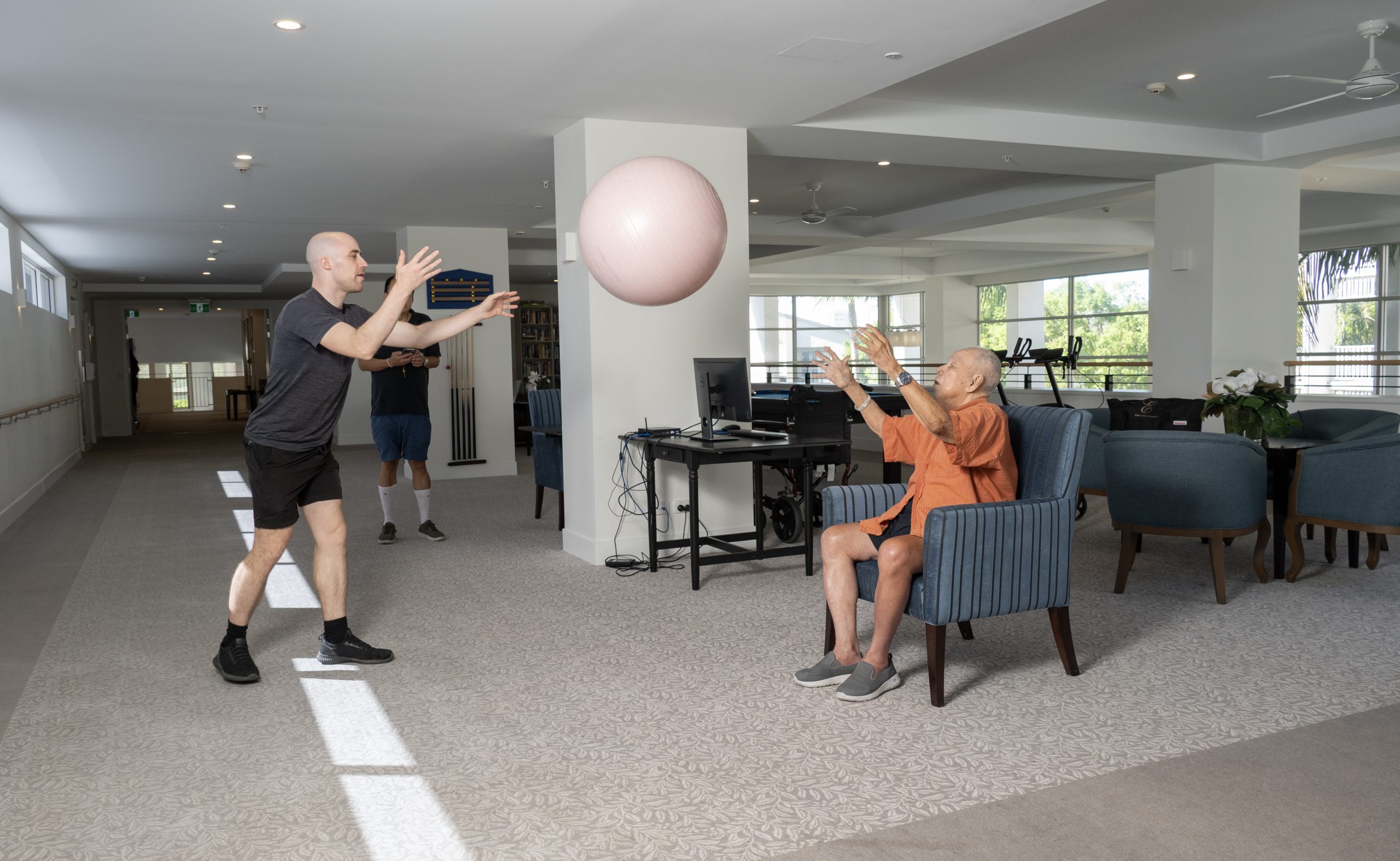
There is no clinic to travel to, no waiting room, and no need to arrange transport. We work in your own home, your garden, your driveway, your local park or your residential aged care room, because that is where your goals actually live.
What Is NDIS Physiotherapy?
NDIS physiotherapy is physiotherapy treatment paid for through your NDIS plan rather than privately, through Medicare, or through private health insurance. The National Disability Insurance Scheme funds supports that help you build and maintain physical function, independence and quality of life, and physiotherapy sits squarely in that group.
An NDIS physiotherapist assesses how you move, how strong you are, how steady you are on your feet, and where pain or stiffness is holding you back. From there you agree a treatment plan together, tied directly to the goals written in your plan. Progress is measured, not guessed at, so you and your plan manager or support coordinator can see whether the physiotherapy support is working.
Who Can Access NDIS Physiotherapy on the Gold Coast?
To access NDIS physiotherapy you first need to be a participant in the scheme. The NDIS looks at three things when you apply. You must have been under 65 on the day you made your access request. You must live in Australia and be an Australian citizen, a permanent visa holder or a protected special category visa holder. And you must meet either the disability requirements or the early intervention requirements set out in the NDIS Act.
The disability requirements cover impairments that are intellectual, cognitive, neurological, sensory, physical or psychosocial, where the impairment is likely to be permanent and substantially reduces your functional capacity in at least one of six areas: communication, social interaction, learning, mobility, self-care or self-management. You do not need a single significant disability to qualify, since more than one impairment can be considered together.
A common worry is what happens at 65. The age test applies on the day you applied, so turning 65 while you are already a participant does not remove you from the scheme. You can choose to stay with the NDIS or move across to aged care.
What Physiotherapy Services Are Covered by the NDIS?
A broad range of physiotherapy is covered by the NDIS where it is reasonable and necessary and linked to your goals. The range of services we provide to participants on the Gold Coast includes:
- Mobility, walking and gait retraining
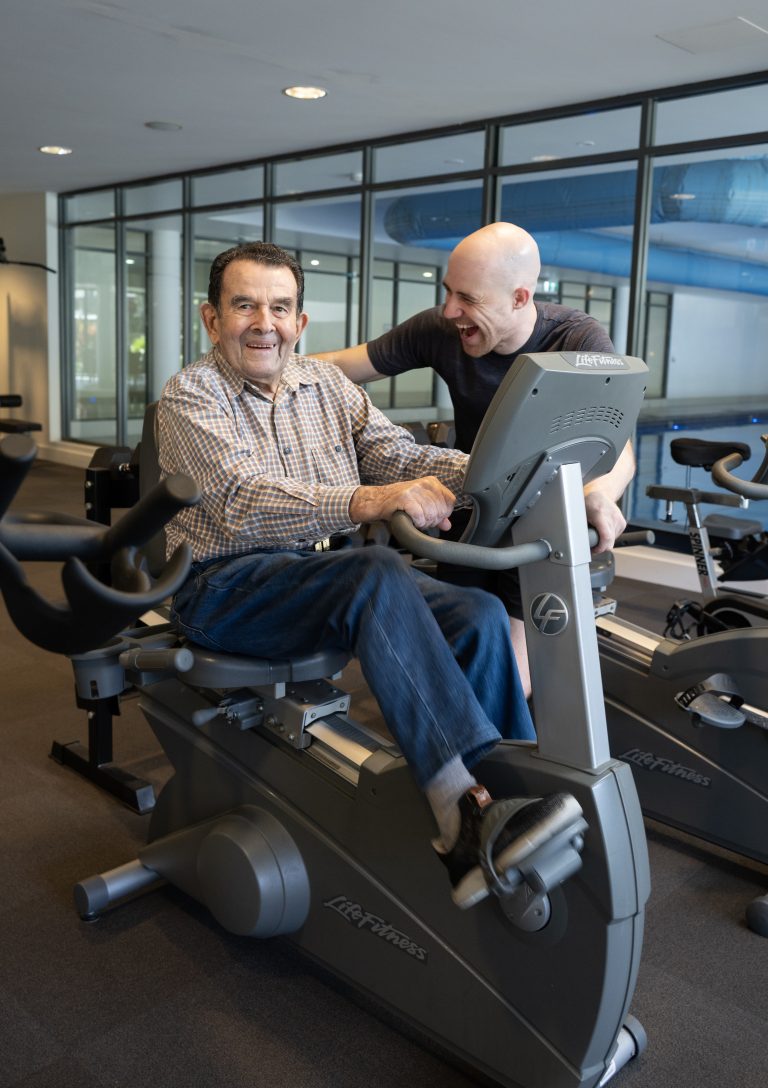
- Strength and conditioning through tailored exercise programmes
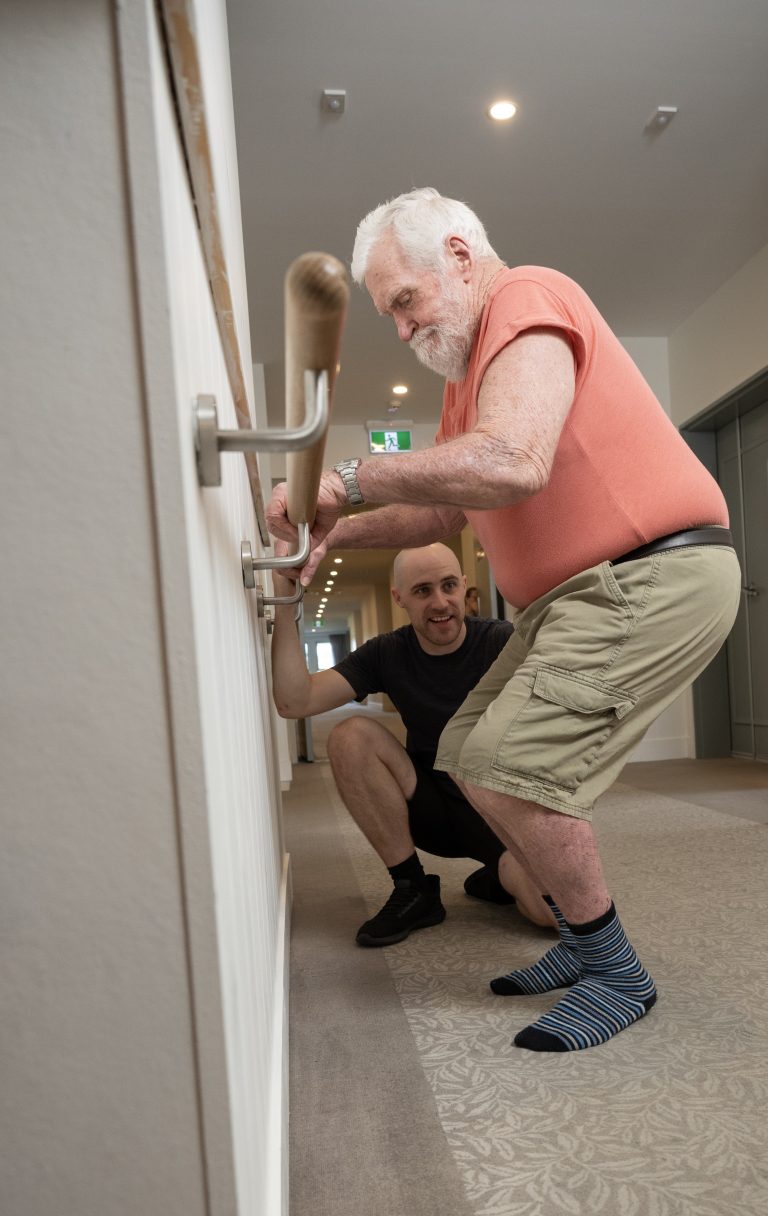
- Balance work and falls prevention
- Transfers, including bed, chair, toilet, car and floor recovery
- Neurological rehabilitation after stroke, or with multiple sclerosis, Parkinson’s disease, cerebral palsy, spinal cord injury or acquired brain injury
- Post-operative and post-hospital rehabilitation
- Chronic pain and pain management strategies
- Respiratory physiotherapy and chest care
- Hydrotherapy programme design
- Assessment for mobility aids, seating and equipment
- Home exercise programmes you can keep doing between visits
- Education and training for family members, carers and support workers
How the National Disability Insurance Scheme Funds Physiotherapy Treatment
The NDIA is equally clear about what it will not fund as therapy. Massage on its own, gym memberships, personal training, and alternative therapies such as crystal or aromatherapy are not funded, and neither are off-the-shelf programmes that are not tailored to you and not backed by evidence.
Physiotherapy is normally funded from your Capacity Building budget, in the Improved Daily Living Skills support category. This is support category 15, and physiotherapy sits inside the Therapeutic Supports registration group. If you are looking at your plan and wondering where the funding for physiotherapy services would come from, that is the line to look for. Funding for therapeutic supports in this category can only be used for therapy, so your physiotherapy funding cannot be diverted to other daily living costs.
Less commonly, physiotherapy can be funded from Core supports under Assistance with Daily Life, but only where it is delivered as a disability-related health support. Most participants will use the Capacity Building route.
Whichever budget applies, every support has to meet the reasonable and necessary test in the NDIS Act. In practice that means your physiotherapy has to connect to the needs and goals written into your plan, help you take part socially or economically, represent value for money, and reflect current good practice. This is why our reports always state the plan goal, the functional problem, what we did about it and how we measured the change.
How Much Does NDIS Physiotherapy Cost on the Gold Coast?
The NDIA sets a maximum hourly price for physiotherapy. Under the NDIS Pricing Schedule 2026-27, effective 1 July 2026, the price limit is $183.99 per hour. This is a national rate, so Queensland and the Gold Coast use the same figure as anywhere else in metropolitan Australia. The NDIS pricing arrangements now also include separate items for telehealth, cancellations, report writing and provider travel.
Provider travel became its own line item on 1 July 2026 and is charged at half the hourly rate, which is $92.00 per hour. In a metropolitan area such as the Gold Coast, up to 30 minutes of travel each way can be claimed per participant.
Two things are worth knowing about billing. Registered providers cannot add gap fees, credit card surcharges or any other extra charge on top of the price limit. And because physiotherapy is an allied health support, the short notice cancellation window is two clear business days rather than seven. We will always talk you through this before you agree to anything, and our full fee schedule is published openly so there are no surprises.
Self-Managed, Plan-Managed and NDIA-Managed NDIS Participants
How your plan is managed decides who you are allowed to book. There are three options, and you can use a combination of them across one plan.
Self-managed. You or your nominee pay providers directly and claim back from the NDIA. Self-managed NDIS participants have the most choice, because they can use registered or unregistered providers and are not bound by the published price limits. Self-managed participants often value this flexibility most.
Plan-managed. A registered plan manager pays your invoices for you and handles the paperwork. You can choose registered or unregistered providers, but price limits still apply either way.
NDIA-managed. The NDIA pays providers directly, and you must use a registered NDIS provider.
Because we are registered, we can work with all three. Plan-managed and self-managed participants can book us, and so can NDIA-managed participants, which is not true of every practice. If you are plan managed and self-managed NDIS funding is split across different parts of your plan, we can invoice accordingly.
Choosing an NDIS Physiotherapist on the Gold Coast
Not every physiotherapy service specialises in disability support, so it is worth asking a few questions before you commit. Check that the physiotherapist holds current AHPRA registration, which is a legal requirement for anyone using the title. Ask about experience with your particular condition. Ask how quickly they can start, because waiting lists vary enormously. Ask what their reports look like, because a weak report at plan review can cost you funding.
Finally, ask whether they will come to you. A mobile NDIS physiotherapy provider sees your actual doorstep, your actual bathroom and your actual stairs, which changes what they recommend.
Do You Need a GP Referral for an NDIS Physiotherapy Appointment?
No. The NDIS does not require a GP referral to book a physiotherapy appointment. Physiotherapists are first contact health professionals, and what triggers funding is your plan, not a referral letter. You can contact us directly and start your NDIS journey with us straight away, as long as its approved by the participant or their support coordinator.
This is different from other funding routes, which does cause confusion. Medicare does require a GP referral, under a GP Chronic Condition Management Plan, and covers up to five allied health services per calendar year in total. Department of Veterans’ Affairs treatment also requires a referral, using form D0904. If you are using one of those instead of or alongside your NDIS funding, the referral rules are stricter.
What Happens at Your Initial Assessment and First Appointment
Your first appointment is a comprehensive assessment and runs for 90 minutes. We start with a conversation about what you want to be able to do, then work through your history, current supports and any equipment you already use.
The physical part of the initial assessment looks at strength, joint range, balance, walking, transfers, pain and safety around the home. From there we agree goals, write a treatment plan, and set out how often we will visit and how we will measure whether it is working. You will usually have something to practise before we come back.
Functional Capacity Assessments and Plan Reviews
A functional capacity assessment is a formal assessment of your ability to carry out daily tasks at home, at work and in the community. The NDIA names physiotherapists among the professionals who can complete one, alongside occupational therapists, psychologists and medical practitioners.
Physiotherapy-led assessments are strongest where the main issues are mobility, transfers, falls risk, physical self-care and equipment need. Where the dominant impairment is cognitive or communication based, another discipline may be a better fit, and we will say so. A well-evidenced assessment gives you something solid to take into your next plan review.
Assistive Technology and Mobility Aids
Physiotherapists are recognised assistive technology assessors under the NDIS. That covers walking frames and rollators, sticks and crutches, manual and powered wheelchairs, scooters, standing frames, transfer hoists and slings, orthoses, pressure care mattresses and postural seating.
What evidence you need depends on cost. Items under $1,500 usually need no formal written assessment. Items between $1,500 and $15,000 need written evidence from an assistive technology advisor. Items over $15,000 need a full assessment and a quote. Most plans also include $500 in the Improved Daily Living budget for independent equipment advice.
Why Choose a Mobile NDIS Physio on the Gold Coast?
Mobile physiotherapy is not just a convenience. Practising a transfer on your own bed, on your own bathroom floor, with your own rails, is more useful than practising it on unfamiliar equipment in a clinic. Our mobile physiotherapy services also mean your family members and support workers can be there, learn the programme and carry it on between visits.
A mobile physio also removes the single biggest reason people stop attending, which is transport. Research consistently supports exercise-based programmes for older adults, with a large Cochrane review of 108 trials finding that exercise reduces the rate of falls by 23 per cent. None of that helps if you cannot get to the session.
Gold Coast Suburbs We Visit
We deliver NDIS physiotherapy services in Gold Coast suburbs across the city, including Robina, Southport, Labrador, Nerang, Helensvale, Hope Island, Runaway Bay, Coombabah, Biggera Waters, Arundel, Ashmore, Broadbeach, Mermaid Waters, Clear Island Waters, Burleigh Heads, Varsity Lakes, Palm Beach, Currumbin, Miami, Oxenford, Coomera, Pimpama and Ormeau. If your suburb is not listed, please ask, because we may still be able to reach you.
Frequently Asked Questions About NDIS Funding for Physiotherapy
Is mobile physiotherapy covered by the NDIS?Yes. The NDIS funds the therapy itself regardless of where it is delivered, and registered providers can also claim provider travel separately, within the published limits.
Can I use my NDIS funding for physiotherapy if my plan is agency managed?Yes, provided you choose a registered NDIS provider. We are registered, so NDIA-managed participants can book with us.
How many sessions will I get?There is no fixed number. It depends on the funding in your Improved Daily Living budget and what is reasonable and necessary for your goals. Since 2025, many plans release funding in three-month periods, so we will plan around that with you.
Can NDIS funding be used for hydrotherapy?Physiotherapy time spent assessing you and designing or supervising a water-based programme can be funded. Pool entry fees are treated differently, so check with your plan manager first.
Can I choose my own physiotherapist?Yes. Choice and control is a core principle of the scheme, and you are free to change providers at any time.
Do you bring equipment to home visits?Yes. We bring what is needed for assessment and treatment, including portable equipment for strength and balance work.
Book an NDIS Physiotherapist on the Gold Coast
If you are ready to start, or you simply want to talk through whether physiotherapy would suit your plan, get in touch. We are happy to speak with participants, family members, support coordinators, plan managers and other health professionals about the supports and services available, and about how care and support at home actually works day to day.
Call GM Physiotherapy on 0478 941 638 or send us a message, and we will arrange a visit that suits you.