What Is The Difference Between A Hip Fracture And Broken Hip
By Grant_Admin
Dec 4, 2025


 Back to all posts
Understanding the Confusion Around Hip Injuries
When you hear someone say, “I broke my hip”, and another person say, “I fractured my hip”, you might assume they’re talking about two completely different injuries. But here’s the truth, both terms describe the same thing: a break in the bone of the hip.
The difference lies mainly in language. “Fracture” is the medical term used by doctors and health professionals, while “break” is the everyday word people use. So if you’ve been worried that a fracture sounds more serious than a break or vice versa, take a deep breath – they’re essentially the same.
That said, not all hip fractures or breaks are created equal. The severity, location, and type of break can significantly affect treatment and recovery. Let’s dig deeper.
Types of Hip Fracture
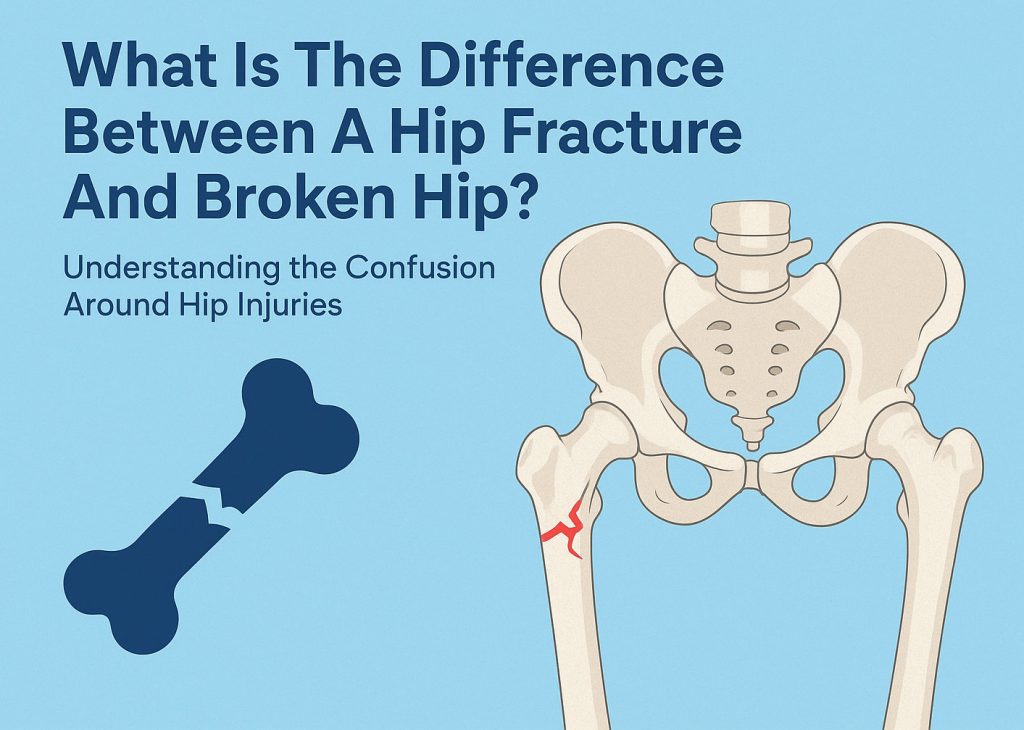
A hip fracture is a break in the upper quarter of the femur (thigh) bone. It is a common injury, particularly in older people who may be frail; it can be caused by falls, accidents or weakened bones due to conditions like osteoporosis.
Doctors classify hip fractures according to where they occur:
Intracapsular fractures – when the break happens in the ball-and-socket joint of the hip.
Intertrochanteric fractures – fractures between the two bony bumps (trochanters) on the femur.
Subtrochanteric fractures – fractures below the trochanters.
Each calls for separate guidelines of treatment and recovery.
So, Is a Hip Break Any Different?
Not at all. When a person tells you they’ve had a “hip break,” they are just using plain language to talk about the same injury. Not that the bone has broken into splinters (although it can in severe instances). You can call a hairline crack, a clean snap or even a more complex break all the same thing, both “fracture” and “break” are appropriate.
Common Causes of Hip Fractures (or Breaks)
Most hip injuries don’t happen out of nowhere. There are a few usual suspects:
- Falls: The number one cause, particularly for older adults.
- Osteoporosis: Weak, brittle bones make fractures more likely.
- Accidents: Car crashes, sports injuries, or workplace incidents can all result in a hip fracture.
- Stress fractures: Small cracks caused by repetitive strain, though less common in the hip.
What can sometimes lead to confusion is that often a break in the hip will lead to a fall, some theories suggest that in many cases breaks due to osteoporosis have led to falls rather than the fall causing the bone to break. The treatment is the same, but sadly it means that by doing everything we can to prevent falls, in cases of severe osteoporosis we may still not be able to prevent hip fractures.
Symptoms of Hip Fractures
How do you know if it’s just a bad bruise or something worse? The traditional presentation of a hip fracture is:
Severe hip pain, groin pain or pelvic pain
Unable to place weight on the leg.
The injured leg is shorter or turned outward.
Swelling, pain or bruising near the hip.
If the symptoms develop suddenly or after a fall or other accident, medical attention is required.
Hip Fracture Treatment
Treatment varies according to the type and severity of the fracture, but usually involves surgery. Your doctor will perform imaging (an X-ray and sometimes a CT scan) to determine whether the bone is broken and what treatment is required. Options include:
Screws or plates: To keep the bone in place while it heals.
Partial hip replacement: When the ball of the joint is replaced.
Total hip replacement: Replacing either the ball or socket (there are pros and cons to each of these).
There are a few exceptions, where if the fracture is minimal and stable, there may be no need for hip surgery. This is more often the case when the break involves the pelvis (pelvic fractures) rather than the hip itself. But like the majority of people, you’ll require rehabilitation.
Recovery and Why Physiotherapy Matters
Surgery is just the beginning of the journey. Recovery from a broken hip can take months, and without proper rehab, it may be difficult to regain mobility, independence and confidence. And that’s what physiotherapy does.
At GM Physiotherapy, we are experts in mobile physiotherapy and osteopathy, so we travel to you, at home or in an aged care facility. Our team supports recovery through:
Gradual exercises to regain strength and balance.
Hydrotherapy, where joints are placed under great pressure and then move more freely.
https://gmphysiotherapy.com.au/hip-fracture-broken-hip-symptoms-risks-recovery/Hands-on therapy to help reduce stiffness and pain.
Custom care plans designed for YOUR specific environment and lifestyle.
The objective is not to heal, per se, it’s helping you regain your independence and confidence.
How Long Does It Take to Recover?
Recovery time depends on the age and general health of the person and on the type of fracture. Walking aids may be required for weeks in some individuals, while others may need months of formalised physiotherapy. On average:
Initial hospital stay: 1–2 weeks.
Supportive walking: In days to weeks after the operation.
Full recovery: Three to six months, and possibly longer.
With proper help, the majority of individuals can restore many of their normal routines.
Preventing Hip Fractures in the First Place
There is, of course, no way to fully protect yourself against accidents, but there are things you can do to minimise the chances:
- Keep bones strong with calcium and vitamin D.
- Stay active with weight-bearing exercises.
- If you are at risk for falls, use walking aids.
- Make your home safe with no trip hazards!
It is always easier to prevent than recover.
Final Thoughts
So what’s the difference between a hip fracture and a hip break? The short answer is there isn’t one. They are two descriptions for the same injury, and “fracture” is what doctors like to hear. What really matters is understanding the type of fracture, seeking appropriate treatment, and following through with rehabilitation.
At GM Physiotherapy, we understand and want to help Gold Coasters through this process. Introducing our house call service tailored to meet your specific needs, whether you recently underwent a surgery or have mobility challenges, we come to you and restore care with confidence.