How Older Adults Should Get Up Safely After A Fall? Learn How To Get Up Safely and Prevent Falls At Home
By Grant_Admin
Jan 12, 2026


 Back to all posts
Why Talking About Falls Matters Among Older People
Let’s face it, falls can be embarrassing, scary and frustrating. But sadly they do occur, particularly among older adults and individuals recuperating from illness, surgery or mobility issues. But the secret is not just in preventing falls, though that’s hugely important as well. It’s also about how to deal with one if it happens. It can make all the difference to have a plan in mind about how you can be safe and regain some confidence.
How To Safely Get Up After A Fall
If you do fall, the first thing to do is stop and take a deep breath, checking for any obvious dangers in your vicinity. Don’t try to get up from the floor too quickly as this can lead to recurrent falls or make injury worse. Take a few minutes to be still, breathe deeply and sense how your body feels. This brief stop allows you to assess for dizziness, pain or any evidence of injury before you attempt to rise, thus minimising the risk of falling again.
When you catch your breath, carefully assess if you are stable enough to move. Are you able to move your arms and legs pain-free? Do you feel lightheaded? If something doesn’t feel right, it might be safer to stick with where you are and call for help. But if you’re feeling good enough to attempt standing up, roll gradually onto your side and wait a few seconds before pushing yourself until you are sitting upright to check in with how you’re feeling and limit the risk of falling. This position allows your body to adapt and keeps you from getting dizzy, which can make you more likely to fall.
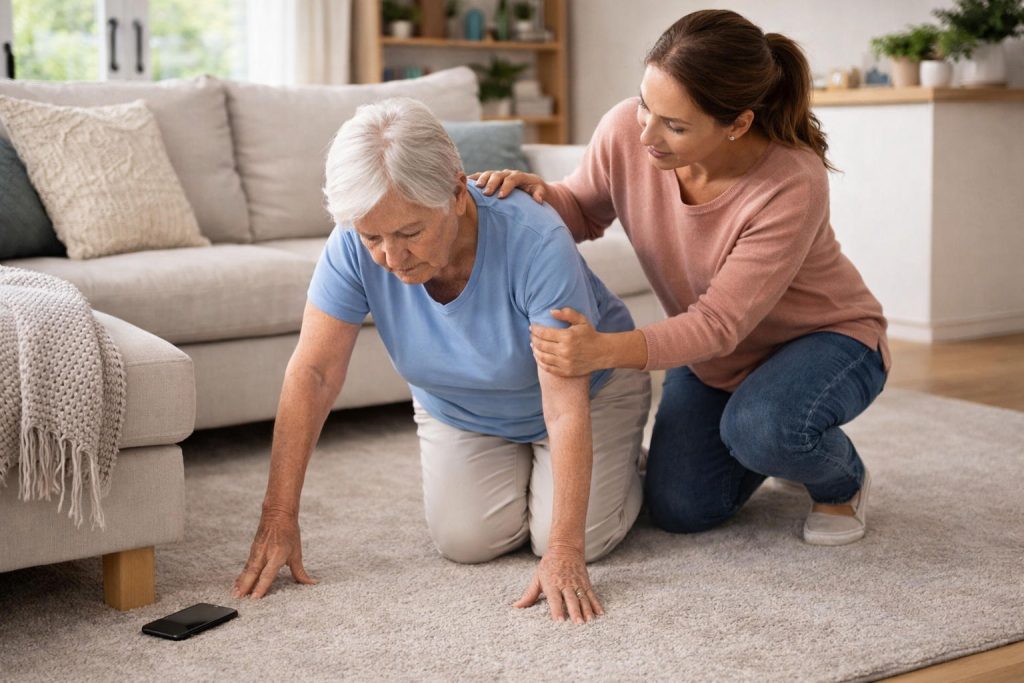
From there, press up gradually with your hands until you are on your hands and knees. So take time with each move. Next, if you can, scoot or crawl to a piece of solid piece of furniture such as a heavy chair, couch, or table. You should pick something that won’t tip over when you lean on it. Keep your hands on the sturdy surface, step one foot forward to bear weight firmly with it. Then, press yourself up gently into a standing position (using your legs and arms at the same time). Once upright, pause again. Big breath, allow yourself to settle a moment before you try moving. If you can, sit and recline in a stable chair for a few minutes before continuing with your day.
What If You Can’t Get Up After A Fall At Home?
There will be times when it’s impossible or unsafe to get up. Above all, stay calm and concentrate on your own safety until help arrives. If you’re able, try to call a neighbour or family member, or use the phone or medical alert device to summon emergency services. While waiting, position yourself comfortably by putting a pillow, rolled towel or blanket under your head or hips. If you can get to one, covering yourself with a blanket or additional clothing will warm your body up, especially if you’re on a cold floor.
If you are asked to help someone who has fallen, consider using the same steps above. If the person who has fallen is confused, unconscious or has severe pain or a deformed limb, don’t attempts to get them up off the floor, contact emergency services and they will guide you through the rest step-by-step.
Reducing Fall Risk To Prevent Falls In The Future
One of the best ways to manage a fall, of course, is by preventing it whenever possible. This can play a huge role in making the home safer. Keeping walkways clear of clutter, cords and throw rugs that could be loose helps reduce the chance of tripping. The installation of grab rails in bathrooms and next to stairs offers an additional support where it’s needed most, so risk factors of falls for older people can be reduced. Another safety feature is the non-slip mat that comes with the shower or bath. Good lighting, especially in hallways and bedrooms at night, can also be a game changer. Just something as simple as trading your slippers or socks for supportive shoes can make a difference in reducing falls and promoting good health.
How GM Physiotherapy Can Help With Fall Prevention
At GM Physiotherapy, we understand that after a fall, you don’t just want the physical injuries treated, but you also need help to rebuild your confidence and your independence. It’s why we provide customised physiotherapy and osteopathy in the privacy of your home or aged care facility. We’re committed to getting you back on your feet after falls and re-establishing the strength and confidence it takes to move about without fear of falling. Although we can’t guarantee that falls won’t happen, we can reduce the chance of falling, minimize falls hazards and built strength and mobility to improve recovery following falls.
Our staff implements an integrative approach specific to your needs. These include treatments for fall-prevention focusing on balance and muscle strengthening, gentle rehabilitation services to get clients back on their feet again, as well as services such as hydrotherapy and manual physiotherapy to relieve stiffness. Outside of physical therapy, we offer common-sense recommendations to help you make your home safer and increasingly secure in the daily patterns of life. Whether you are at home or your workplace, in the Gold Coast and surrounds, our mobile physiotherapy service is here to help you.
FAQs About Tips To Prevent Falls
Many people ask me if they should visit a doctor after every fall, especially if they’re worried about their ability to move around. That’s not always the case, but if you do hit your head and feel dizzy or degree of pain and swelling. Others wonder how physiotherapy can prevent falls, and the answer is that by strengthening muscles, improving balance and increasing mobility, all of which are significant in keeping upright and stable. If you’ve been falling frequently, it could be a symptom of an underlying problem like muscle weakness, vision issues or side effects from medications. In these scenarios, some physiotherapy advice can direct you towards appropriate solutions.
Conclusions
Falls can be upsetting, but having a plan for what to do if one occurs, and not waiting until after you’ve fallen again to figure it out, will give you peace of mind. Slowing down, being cautious and recognising when you need help are part of keeping yourself safe. In addition to that, making your surroundings safer and building strength through physiotherapy can greatly diminish your risk of a repeat fall.
At GM Physiotherapy, we are dedicated to assisting people in moving with confidence and living independently, as well as overcoming the fear of falling. Whether you’ve had a fall recently or want to take steps to avoid one, our friendly team is here for you. If you are ready to make a change to your health and mobility, contact us today at GM Physiotherapy. We would be honoured to walk with you through this process.