Stroke Rehabilitation Gold Coast: Mobile Physiotherapy at Home
It can be overwhelming to comprehend the impact of a stroke, both for patients and their families, but there are good prospects of recovery. With the proper rehabilitation treatment tailored to your individual needs, you can restore strength, mobility, and independence.


What is a stroke?
A stroke, also medically referred to as a cerebrovascular accident (CVA), is the rapid development loss of brain function(s) due to a disturbance in the blood supply to the brain. This disruption starves brain cells of oxygen and nutrients, and they begin to die within minutes. Different parts of the brain are responsible for various body functions, so the effects of strokes vary according to which part of the brain the stroke occurred in and its severity.
There are two main types of strokes:
- Ischaemic Stroke: The most common type, caused by a blockage in a blood vessel supplying the brain. This can result from a blood clot or a build-up of fatty deposits (atherosclerosis).
- Haemorrhagic Stroke: Occurs when a blood vessel in the brain bursts, leading to bleeding (haemorrhage) that damages brain tissue.
Both types of stroke can have life-changing implications, including:
- Physical Effects: Weakness or paralysis, often on one side of the body (hemiplegia or hemiparesis), is a common symptom following a neurological event.
- Communication Challenges: Difficulty speaking or understanding language (Aphasia is a common condition that can affect communication in individuals recovering from a brain injury.).
- Cognitive Impairments: Problems with memory, reasoning, or judgment can be associated with neurological conditions.
- Emotional Changes: Anxiety, depression, or mood swings as the brain heals and adjusts.
Strokes can happen suddenly, with warning signs such as face drooping, arm weakness, and speech difficulties. Recognising these symptoms early and seeking immediate medical help from health professionals can improve outcomes.
Contact Our Team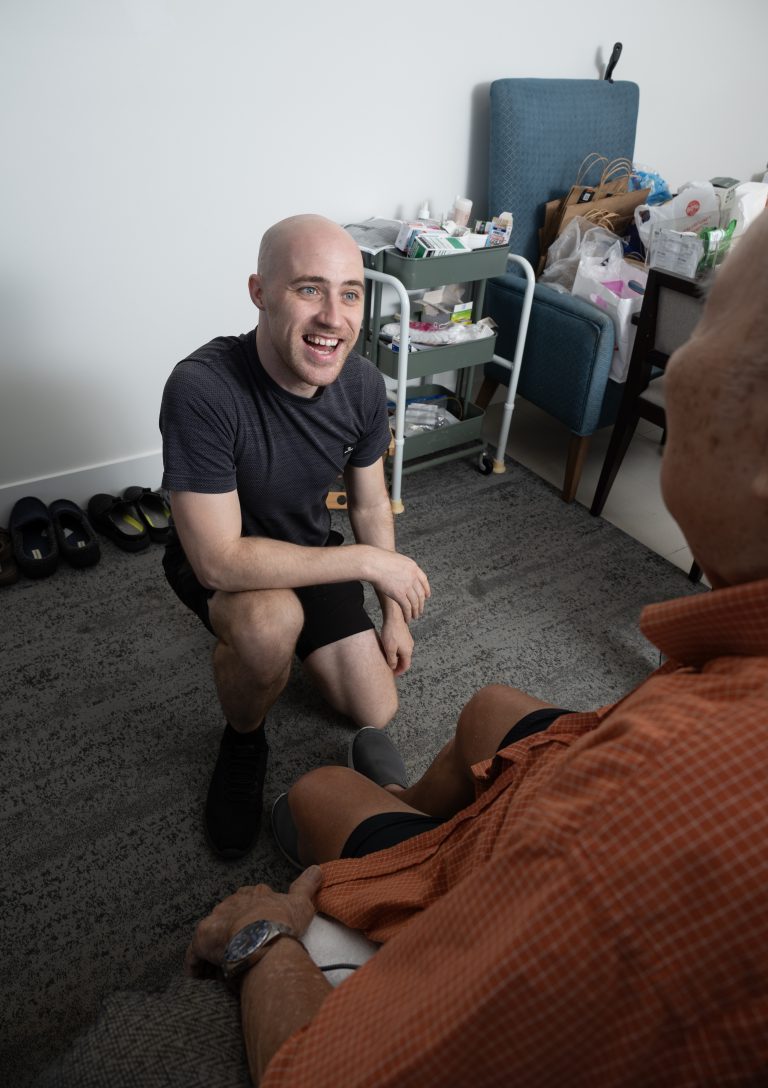
Stroke Rehabilitation
It can be overwhelming to comprehend the impact of a stroke, both for patients and their families, but there are good prospects of recovery. With the proper rehabilitation, treatment tailored to your individual needs, you can restore strength, mobility and independence. There are many health professionals, including physiotherapists , who help you along this journey.
Here at GM Physiotherapy, we recognise the issues that stroke survivors experience and the need for individualised, empathetic approaches. Our mobile stroke rehabilitation is aimed at re-establishing movement and function, getting you back to what you enjoy, and doing this in an integrated and convenient way from home, visiting nurses and allied health providers.
We design personalised rehabilitation plans incorporating evidence-based approaches in conjunction with your health care professional to work on improving your movement, strength and coordination. Whether you want to be able to walk unassisted again, improve your quality of life, or just get back the confidence you once had when performing your daily routine, our knowledgeable physiotherapists can help you every step of the way.
Contact Us To Start Your Recovery JourneyAt a glance
- We are a fully mobile team, so stroke rehabilitation happens in your own home.
- Repetitive, task-specific practice is the approach Australian guidelines put first.
- Rehabilitation continued at home is linked to shorter hospital stays and better independence.
- NDIS, Support at Home, Medicare, DVA and private funding all accepted.
Mobile Stroke Rehabilitation Across the Gold Coast
GM Physiotherapy brings stroke rehabilitation to your door anywhere on the Gold Coast, Queensland. We work with you at home, in your retirement village or in your aged care room, which means no transport to arrange and no waiting room at the end of a tiring journey. Neurological physiotherapy of this kind is simply physiotherapy for people whose movement has been affected by an injury to the brain or nervous system.
Home is also where the practice has to happen. Getting out of your own chair, managing your own back step and walking to your own letterbox are the tasks that decide whether you are independent, and they are easier to retrain in the place you actually do them. We can see the loose rug, the low couch and the bathroom layout, and we can teach your family or support worker the same techniques so the work continues between visits.
5.5 days
shorter hospital stay, on average, when stroke rehabilitation continues at home with a coordinated team, according to a Cochrane review of 17 trials and 2,422 people.
That same review found lower odds of death or dependency at six months, rated moderate certainty, with the clearest benefit for people who had a mild to moderate stroke and a properly coordinated team around them. Coming home sooner is not a shortcut. It works when the rehabilitation comes with you.
What Stroke Rehabilitation Physiotherapy Involves
Every stroke is different, so every programme is different. After an assessment we concentrate on the things that are holding you back, which usually means helping you relearn the movements that matter for daily living, and rebuilding function and independence step by step.
Walking and Gait Training
Retraining a safe, efficient walking pattern, with work on foot clearance, step length, turning and walking outdoors on uneven ground. We assess whether a stick, frame or ankle brace would help, and set it up properly.
Arm and Hand Function
High-repetition, task-specific practice using your own cups, cutlery and door handles. Guidelines recommend this for anyone with some movement returning, including people who also have neglect or other cognitive effects.
Balance and Falls Prevention
Standing balance, stepping reactions, turning safely and getting up off the floor. Falls are common after stroke and the fear of falling can shrink your world faster than the weakness does.
Strength and Fitness
Strengthening weakened muscles and rebuilding cardiovascular fitness. Strength work does not increase spasticity, and low fitness is one of the main things that limits how much rehabilitation you can tolerate.
Transfers and Daily Activities
Bed, chair, toilet, shower and car. These are the transfers that decide whether you can stay at home, and they are practised on your own furniture.
Stiffness, Spasticity and Pain
Stretching, positioning, movement and hands-on treatment to manage tightness, shoulder pain and the stiffness that develops when a limb is not moving well.
How Much Practice Recovery Actually Takes
The Australian and New Zealand clinical guidelines for stroke management are direct about this. Exercise and repetitive task-specific practice should be the principal rehabilitation approaches, used in preference to older handling-based methods, and that applies to arm function, balance and walking alike. The aim is to maximise what the brain can relearn.
Dose matters as much as technique. For people who can walk, the guidelines point to walking training at 60 to 85 per cent of heart rate reserve for at least 40 minutes, three times a week, over about 10 weeks. Cardiorespiratory training is recommended once you are medically stable, whatever your age or how long ago your stroke was, at 30 to 40 minutes, three to five times a week. Those are higher numbers than most people expect, which is exactly why a written home programme matters more than the hour we spend with you.
This is neuroplasticity in practice. The brain reorganises in response to repeated, specific, effortful practice, so the aim is many good repetitions rather than a few perfect ones.
One honest caveat. Earlier and harder is not automatically better in the first days after a stroke. The Australian AVERT trial found that very early, high-dose mobilisation within 24 hours of stroke onset actually reduced the odds of a good outcome compared with usual care, and shorter, more frequent sessions are now favoured in that acute window. By the time you are home, the picture is different and the evidence supports working hard.
What to Expect From Your First Visit
Your first appointment is a 90-minute assessment in your own home. We start with what you want to be able to do, because “walk to the coffee shop with my wife” is a better goal than “improve mobility”. We then look at strength, movement, tone, balance, walking, transfers, falls risk and how you are managing daily living tasks following a stroke.
From there we agree measurable goals, how often we will visit and what you will practise in between. We use standard outcome measures such as timed walking and balance tests so progress is measured rather than assumed, and we write to your GP and rehabilitation team so everyone is working to the same plan.
Just Home From Hospital
If you are coming out of the stroke unit or inpatient rehabilitation, we can pick up the programme straight away so momentum is not lost in the gap between discharge and an outpatient appointment. We liaise with your discharge planner and rehabilitation team.
Months or Years After Your Stroke
Recovery does not stop when funded rehabilitation ends. People regain function years after a stroke when they return to structured practice, and we often see clients who were discharged too early or who have lost ground since.
Working With Your Stroke Team
Stroke recovery is a team effort. We work alongside your GP, rehabilitation physician, stroke care coordinator, occupational therapist, speech pathologist, exercise physiologist and your aged care or disability providers, and we report back so your care plan reflects what has actually changed. We set goals together and review them, because your wellbeing matters as much as the numbers on an outcome measure.
Physiotherapy concentrates on movement: walking, balance, strength, transfers and the use of your affected arm and leg. An occupational therapist concentrates on daily living tasks, equipment and the home environment, and speech pathology on communication and swallowing. Where one of those would help you more than another physiotherapy session, we will say so and help arrange it. We provide the same neurological rehabilitation for people living with multiple sclerosis, Parkinson’s disease and brain injury.
The Stroke Foundation runs StrokeLine on 1800 787 653, staffed by health professionals, and its EnableMe website has free recovery resources for survivors and carers. Gold Coast University Hospital provides acute stroke care and an inpatient rehabilitation unit, and we are happy to work alongside the team there after you are discharged.
Funding for Stroke Rehabilitation
Our fees are published openly, so you know the cost before you book. A 90-minute initial assessment is $200 and a 60-minute treatment session is $165. Full details are on our fees page. The main funding routes are:
- NDIS. GM Physiotherapy is a registered NDIS provider. Stroke is one of the more common reasons for access where the effects are permanent and significant, and applications must be made before age 65. See our NDIS physiotherapy page.
- Support at Home. Physiotherapy is classed as a clinical support under Support at Home, so eligible older people pay no contribution towards it. We see clients under My Aged Care (Support at Home) through their registered provider.
- Medicare. A GP Chronic Condition Management Plan gives up to five subsidised allied health services per calendar year. You will need a referral from your doctor.
- DVA. Gold Card holders, and White Card holders with an accepted condition, can access treatment with a referral from their doctor.
- Private health insurance. Rebates depend on your level of extras cover.
- Private. No referral, no waiting list and no eligibility test, which is often the quickest way to start.
Where We Provide Stroke Rehabilitation on the Gold Coast
We provide in-home stroke rehabilitation across the Gold Coast, QLD, including Southport, Labrador, Runaway Bay, Hope Island, Helensvale, Biggera Waters, Arundel, Ashmore, Nerang, Robina, Clear Island Waters, Broadbeach, Mermaid Waters, Burleigh Heads, Varsity Lakes, Palm Beach, Currumbin and Coolangatta, along with the retirement villages and aged care homes within them. If your suburb is not listed, please ask.
Start Stroke Rehabilitation at Home
Whether you are arranging care for yourself or for a parent or partner, we are happy to talk it through with no obligation, including which funding route fits your situation. We visit seven days a week between 8am and 6pm by appointment.
Call GM Physiotherapy on 0478 941 638 or send us a message, and we will arrange a home visit that suits you.
Discover the GM Physiotherapy difference: personalised, mobile and engaging care that makes your recovery journey as effective as it is rewarding.

Personalised Rehabilitation Plans
Every stroke is different, and so are you. We understand that no two recoveries are the same. That is why our experienced physiotherapists design a rehabilitation plan tailored specifically to your goals, needs and progress. Whether it is regaining movement, improving balance or building strength, your recovery is as unique as you are.
Mobile Physiotherapy, We Come to You
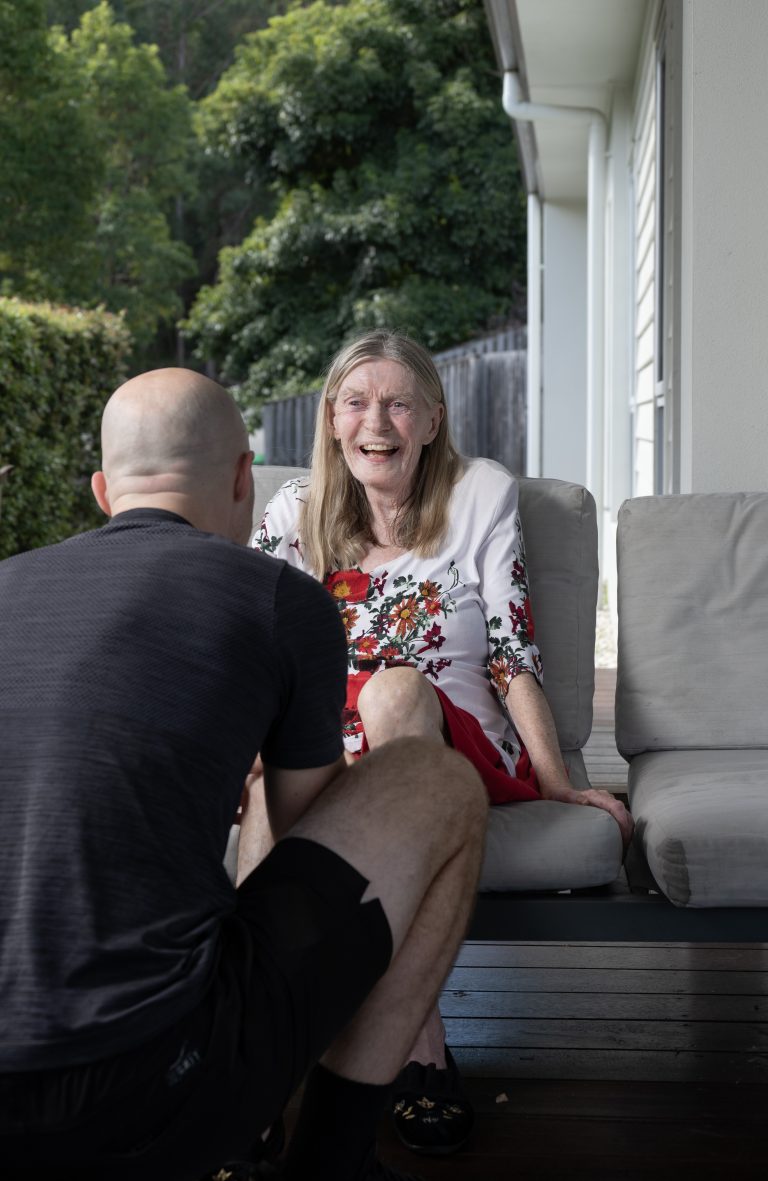
Comfortable, convenient and stress free. Forget the hassle of clinic visits. At GM Physiotherapy, we bring professional stroke rehabilitation right to your doorstep. You can focus on your recovery in the familiar surroundings of your home, where you feel most comfortable and confident.

Making Therapy Fun and Engaging
Rehabilitation that does not feel like work. Recovery does not have to be dull. Our sessions are designed to be engaging, interactive and even fun. From therapeutic games to movement-based activities you enjoy, we create an environment where progress feels rewarding, and sometimes even exciting.

Gold-Standard Care
Backed by evidence, delivered with heart. At GM Physiotherapy, we combine the latest in evidence-based stroke rehabilitation with a warm, empathetic approach. You will receive high-quality care that not only meets clinical standards but also inspires and motivates you every step of the way.
Contact Our Team Today
We work with a range of services to help reduce the cost of your treatment


